LDL101: LDL-C 숫자 너머의 이야기
LDL-C 130 mg/dL. 우리는 이 숫자에서 무엇을 보고 있고, 무엇을 놓치고 있을까요? LDL-C의 의미를 particle과 cumulative exposure의 관점에서 다시 봅니다.
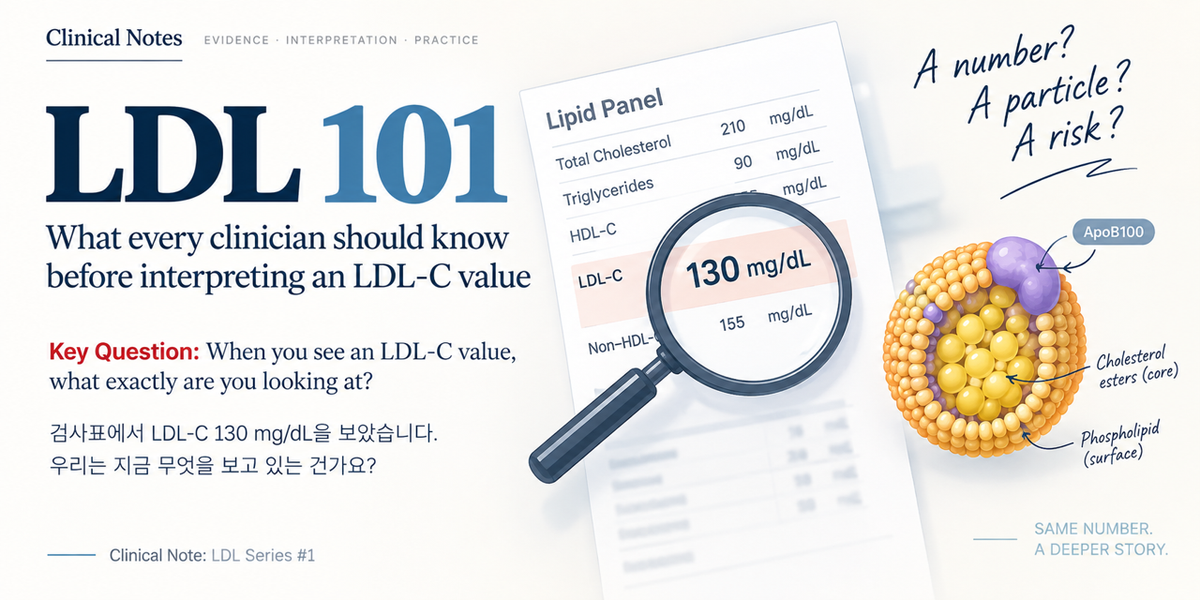
What every clinician should know before interpreting an LDL-C value
Key question: When you see an LDL-C value, what exactly are you looking at?
우리는 매일 LDL을 치료한다고 말합니다.
오늘 검사표에서 LDL-C 80 mg/dL을 보았다면, 우리는 지금 무엇을 보고 있는 건가요? 이 숫자가 말해주지 못하는 것은 무엇인가요?
1. LDL-C is not LDL.
LDL-C의 C는 콜레스테롤(cholesterol) 입니다.
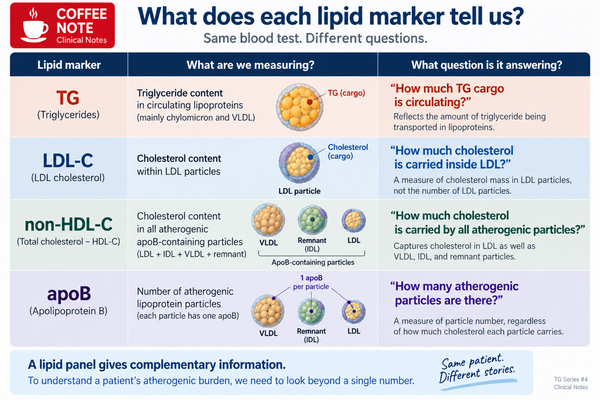
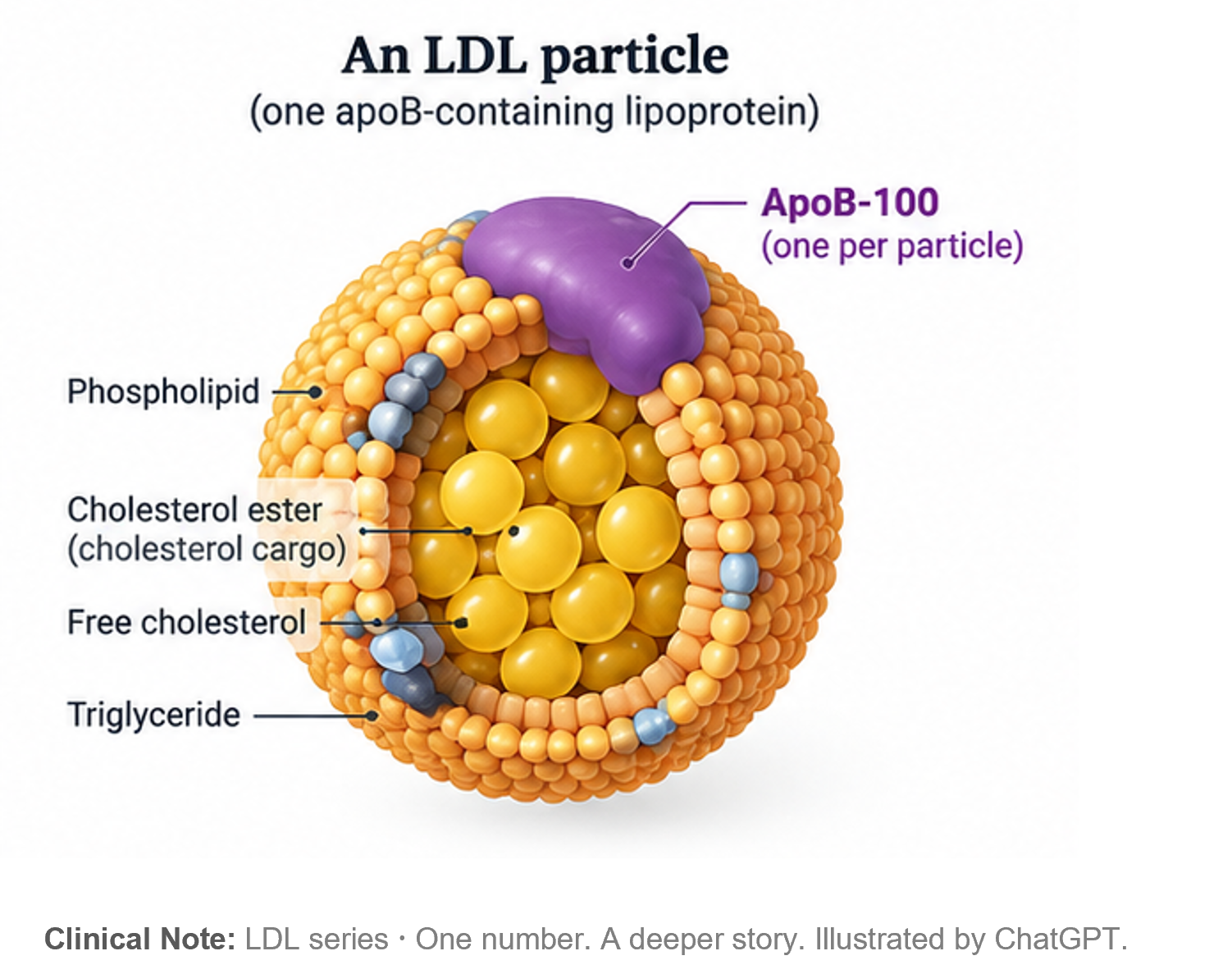
LDL-C는 LDL 이라는 입자 자체가 아니라, 그 입자들에 실려 있는 cholesterol mass를 나타냅니다.
그러니까 우리가 검사실에서 보는 LDL-C는 LDL particle의 수가 아니라, LDL particles 안에 실려 있는 콜레스테롤의 양입니다. 따라서 LDL-C 80 mg/dL이라는 숫자가 “LDL particle이 몇 개 있는가”를 직접 말해주는 것은 아닙니다.
LDL-C ≠ LDL particle
2. LDL은 어디서 오는가?
Where does LDL come from?
Liver → VLDL → remnant/IDL → LDL
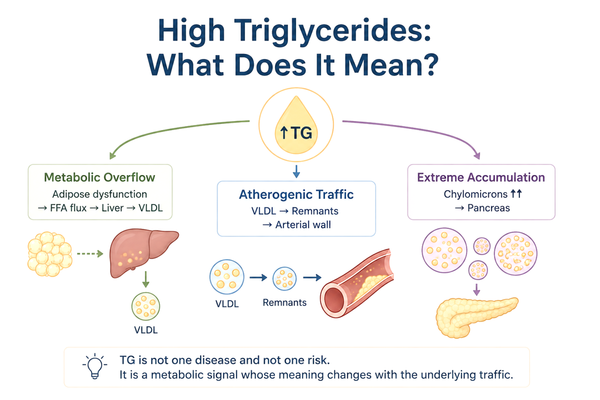
간에서 중성지방(TG)과 콜레스테롤을 apoB100-containing VLDL particle으로 내보내고, TG가 제거되면서 점차 cholesterol-rich LDL이 됩니다.
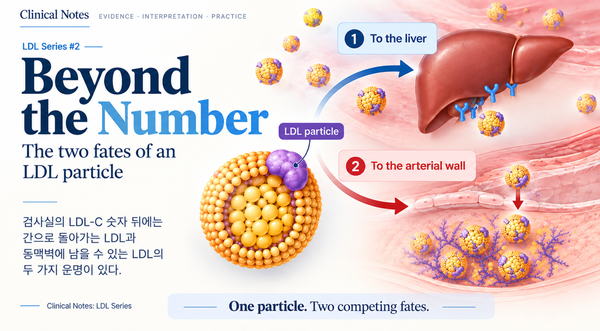
LDL은 원래 병적 particle이 아닙니다.
LDL은 콜레스테롤을 말초 조직으로 운반하고, LDL 수용체를 통해 주로 간에서 제거되는 정상적인 transport system의 일부입니다.
문제는 LDL의 “존재”가 아니라, 동맥벽에 노출되는 concentration × duration.
같은 LDL-C라도 얼마나 높은 농도에, 얼마나 오래 노출되었는지가 중요합니다. Atherosclerosis는 오늘의 LDL-C가 아니라 cumulative exposure의 결과입니다.
3. LDL은 어떻게 atherosclerosis를 유발하는가?
Circulating apoB-containing particles enter the arterial intima. Some are retained there. With sufficient particle burden over sufficient time, retained lipoproteins initiate and sustain the biological processes that produce atherosclerotic plaque.
즉, entry → retention → inflammatory response → plaque
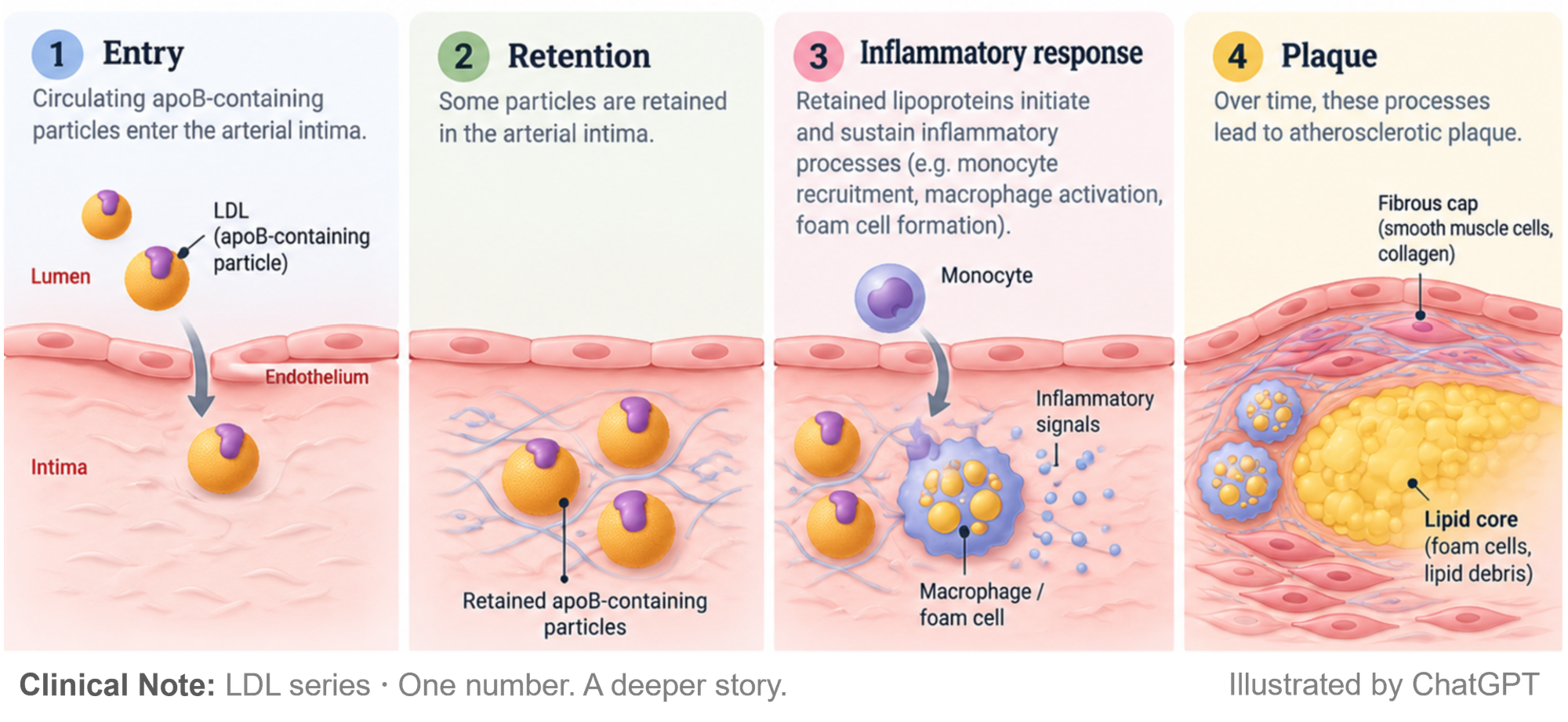
Atherosclerosis is not a response to a single LDL-C measurement. It is the consequence of cumulative exposure to atherogenic particles over time.
Normal transport particle → concentration × duration → arterial retention → plaque
4. 다시 진료실 숫자로
So, what does today's LDL-C mean?
LDL-C는 오늘 채혈한 순간의 콜레스테롤 농도이지만, 우리가 알고 싶은 것은 사실 그 환자가 지금까지 겪어온 atherogenic lipoprotein exposure와 앞으로의 exposure 입니다.
그러니까 같은 LDL-C 80이라도
- 28세부터 지속적으로 80인 사람
- 평생 60 정도였다가 최근 hypothyroidism 때문에 80이 된 사람
- 치료 전 130이었다가 statin으로 80이 된 환자
는 같은 LDL-C value이지만 같은 biological story가 아닙니다.
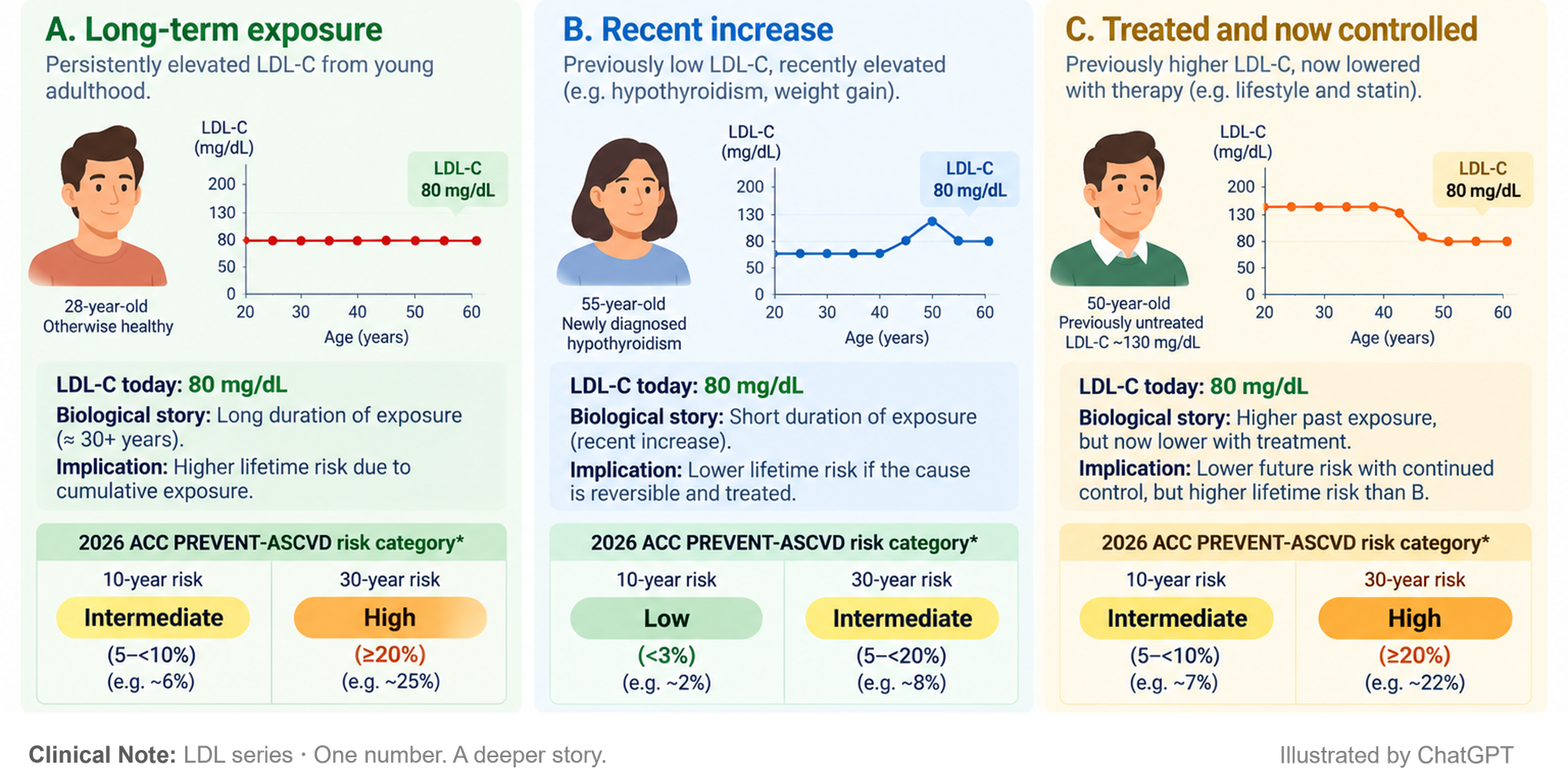
Same LDL-C today ≠ same biology ≠ same risk.
Never interpret LDL-C without context.
◆ Clinical takeaway
When you see an LDL-C value, ask:
① What is the LDL-C now?
② How long has it likely been at this level?
③ Is this untreated, newly elevated, or already treated?
하지만 한 가지가 더 있습니다.
같은 LDL-C라도 죽상경화성 입자의 수는 다를 수 있다는 점이요.
→ Next: <LDL series #2>
LDL-C vs apoB — cholesterol mass is not particle number.
References
1. Writing Committee Members, Blumenthal RS, et al. 2026 ACC/AHA/AACVPR/ABC/ACPM/ADA/AGS/APhA/ASPC/NLA/PCNA Guideline on the Management of Dyslipidemia: A Report of the American College of Cardiology/American Heart Association Joint Committee on Clinical Practice Guidelines. Circulation 2026;153(17). doi:10.1161/CIR.0000000000001423.
2. Borén J, et al. Low-density lipoproteins cause atherosclerotic cardiovascular disease: pathophysiological, genetic, and therapeutic insights: a consensus statement from the European Atherosclerosis Society Consensus Panel. Eur Heart J 2020;41:2313–30. doi:10.1093/eurheartj/ehz962.
3. Ference BA, et al. Low-density lipoproteins cause atherosclerotic cardiovascular disease. 1. Evidence from genetic, epidemiologic, and clinical studies. A consensus statement from the European Atherosclerosis Society Consensus Panel. Eur Heart J 2017;38:2459–72. doi: 10.1093/eurheartj/ehx144.