TG가 높은데 LDL-C는 70입니다. 괜찮을까요?
같은 TG, 같은 LDL-C라도 atherogenic particle burden은 다를 수 있습니다. TG의 cargo–vehicle–traffic 비유를 particle number까지 확장해, TG가 높은 환자의 lipid panel을 진료실에서 어떻게 다시 읽을지 살펴봅니다.
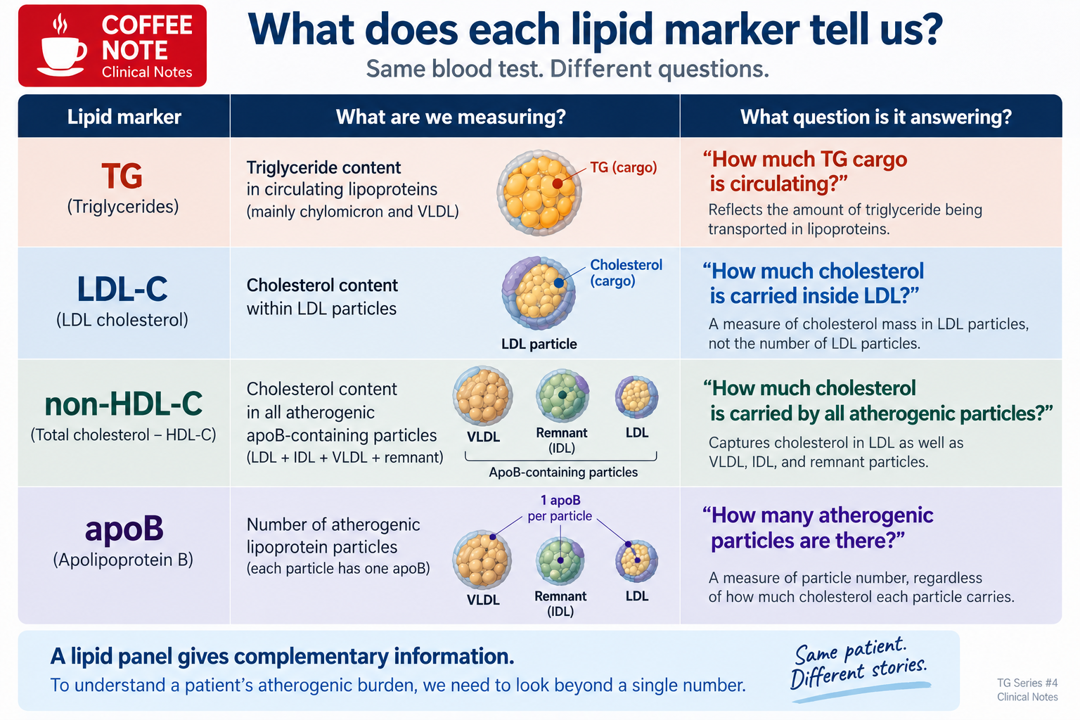
Key Question
우리가 lipid panel에서 측정하는 것은 cholesterol인가, particle인가?
When LDL-C does not tell the whole story

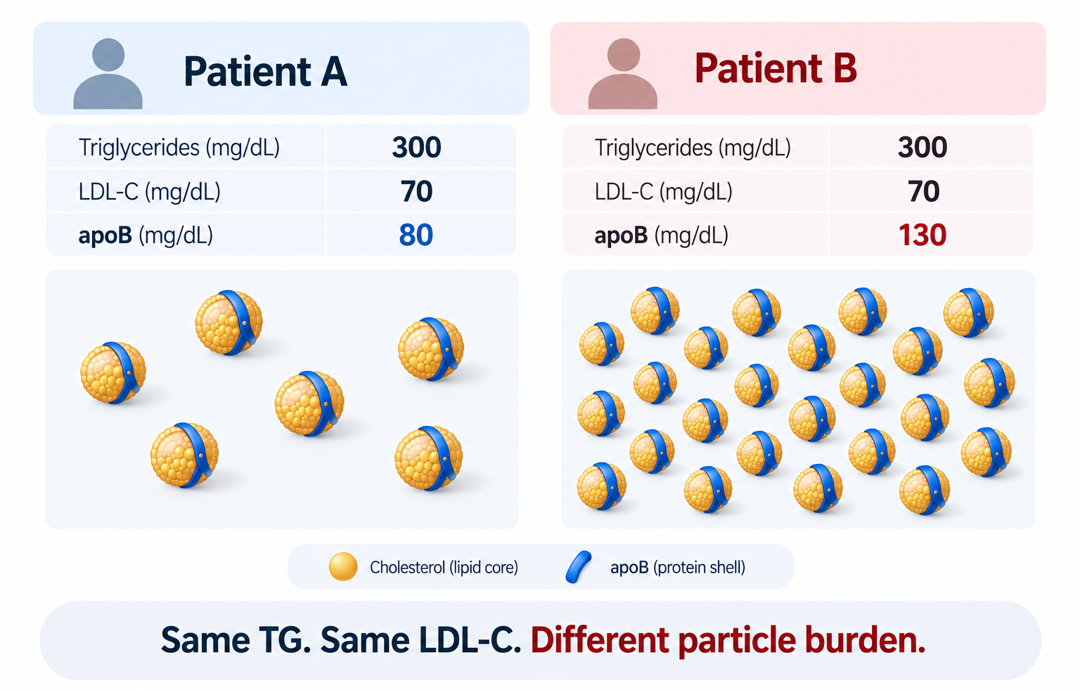
두 환자가 진료실에 왔습니다.
Routine lipid panel에서 두 사람 모두 TG 300, LDL-C 70 mg/dL입니다.
두 사람의 atherogenic particle burden도 같을까요?
Figure 4-1. Same TG. Same LDL-C. Same particle burden?

1. LDL-C 70은 무엇이 70이라는 뜻인가?
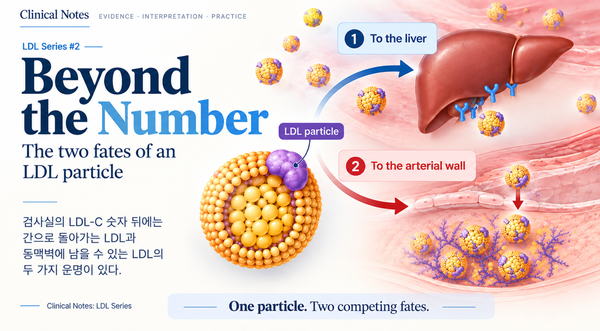
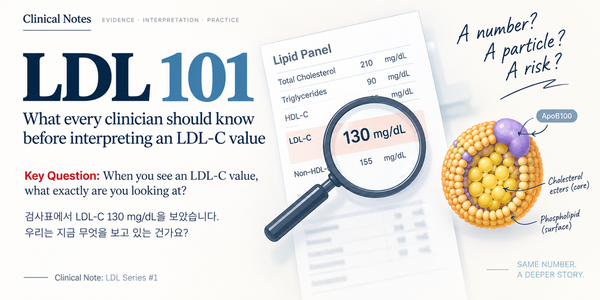
LDL (low-density lipoprotein)과 LDL-C (LDL cholesterol)는 같지 않습니다.
LDL은 lipoprotein particle 이름이고, LDL-C는 그 LDL particles 안에 실린 cholesterol의 총량입니다.
따라서 LDL-C는 atherogenic particle 개수 자체를 의미하지 않습니다.
cholesterol mass (LDL-C) ≠ particle number (apoB)
왜 particle number가 중요할까요?
LDL, VLDL remnant 등 동맥경화성 lipoprotein은 모두 apoB를 하나씩 가지고 있습니다. 따라서 혈중 apoB는 이러한 atherogenic particles의 수를 반영하며, particle이 많을수록 동맥벽에 들어가 머물 기회도 많아집니다.
여기서 질문.
TG 300 mg/dL인데 LDL-C가 70 mg/dL이라면,
LDL-C가 낮다는 이유만으로 atherogenic lipoprotein burden도 낮다고 말할 수 있을까요?
2. 그런데 TG-rich state라면?
VLDL (apoB-100)
→ TG를 내려놓음
→ remnant/IDL (apoB-100)
→ remodeling
→ LDL (apoB-100)
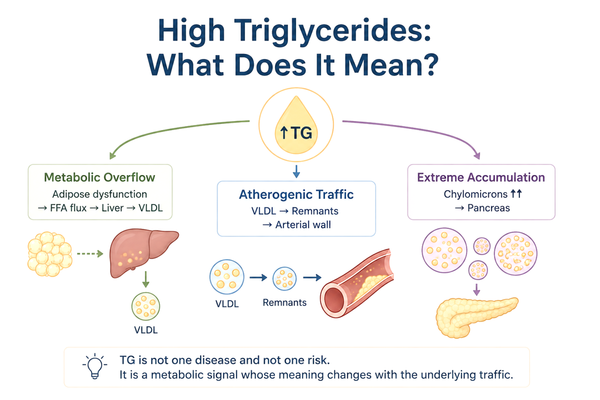
VLDL 같은 TG-rich lipoprotein이 TG를 잃는다고 particle 자체가 사라지는 것은 아닙니다.
TG라는 cargo를 내려놓으면서 particle의 크기와 lipid composition은 달라지지만, apoB-100은 그 particle에 계속 남아 있습니다 (TG series #1).
The cargo changes, but the apoB particle remains.
따라서 TG-rich state에서는 LDL-C만으로는 LDL 밖의 VLDL/remnant cholesterol과 전체 apoB particle burden을 충분히 설명하지 못할 수 있습니다.
3. 그러면 같은 TG 300, LDL-C 70인 두 사람도 particle burden은 다를 수 있나?
TG-rich state에서는 VLDL/remnant metabolism과 remodeling을 거치면서 각 apoB particle이 운반하는 cholesterol의 양이 달라질 수 있습니다.
따라서 같은 LDL-C라도 적은 수의 cholesterol-rich particles일 수도 있고, 더 많은 수의 cholesterol-poor particles일 수도 있습니다.
쉽게 말하면, 같은 양의 cholesterol을 적은 수의 차량이 나누어 싣고 있을 수도 있고, 더 많은 차량이 조금씩 나누어 싣고 있을 수도 있다는 뜻입니다.
The amount of cholesterol and the number of particles are related
—but they are not the same thing.
따라서 TG-rich phenotype에서는 낮은 LDL-C가 반드시 낮은 apoB particle burden을 의미하지는 않습니다.
4. 그 차이를 어떻게 볼 것인가? — non-HDL-C와 apoB
LDL-C, non-HDL-C, apoB는 서로 경쟁하는 검사가 아니라 서로 다른 질문에 답하는 지표입니다. 특히 TG가 높은 환자에서는 LDL-C 밖의 atherogenic lipoproteins를 함께 보는 것이 중요한 단서가 됩니다.

Non-HDL-C (= total cholesterol − HDL-C)는 LDL뿐 아니라 IDL, VLDL/remnant 등 atherogenic apoB-containing lipoproteins가 운반하는 cholesterol을 함께 보여줍니다.
apoB는 각 atherogenic particle에 하나씩 존재하는 apoB를 통해 particle number를 반영합니다.
Remnant cholesterol (RC)은 또 하나의 particle count가 아니라, TG-rich/remnant particles에 실린 cholesterol을 따로 생각한 개념입니다(즉 TG가 아니라 cholesterol을 보는 값)
TG = cargo / energy substrate
Remnant cholesterol = remnant에 실린 cholesterol
apoB ≈ atherogenic particle number
(atherogenic particle number→ a major determinant of atherosclerotic risk)
Figure 4-2. Suppose we measured apoB.

LDL-C와 particle burden이 어긋날 가능성이 있는 상황에서 apoB를 생각해볼 수 있습니다.
① TG가 높은 경우
② Obesity, insulin resistance, diabetes 등 metabolic phenotype
③ LDL-C가 낮거나 치료 목표에 도달했는데도 residual lipid risk가 의심되는 경우
핵심 질문은 하나입니다.
“Could LDL-C be underestimating the atherogenic particle burden in this patient?”
5. LDL-C가 낮아도 residual lipid risk가 남을 수 있다.
LDL-C가 목표에 도달했다고 해서 모든 lipid-related risk가 설명된 것은 아닙니다.
특히 TG가 높은 환자에서는 LDL 밖의 VLDL/remnant 같은 apoB-containing lipoprotein burden이 남아 있을 수 있습니다.
이 burden을 cholesterol의 관점에서 보면 non-HDL-C나 remnant cholesterol로, particle number의 관점에서 보면 apoB로 바라볼 수 있습니다.
즉, 서로 별개의 위험이라기보다 같은 atherogenic lipoprotein burden을 서로 다른 lens로 보는 것입니다.
LDL-C at goal ≠ all lipid-related risk accounted for.
6. 자, 이제 처음의 두 환자로 돌아가 봅시다.
Lipid panel 다시 읽기
Step ①. LDL-C 70 — 무엇이 70이라는 뜻이지?
cholesterol mass ≠ particle number
Step ②. non-HDL-C와 apoB — 같은 이야기를 하고 있나?
Are they concordant?
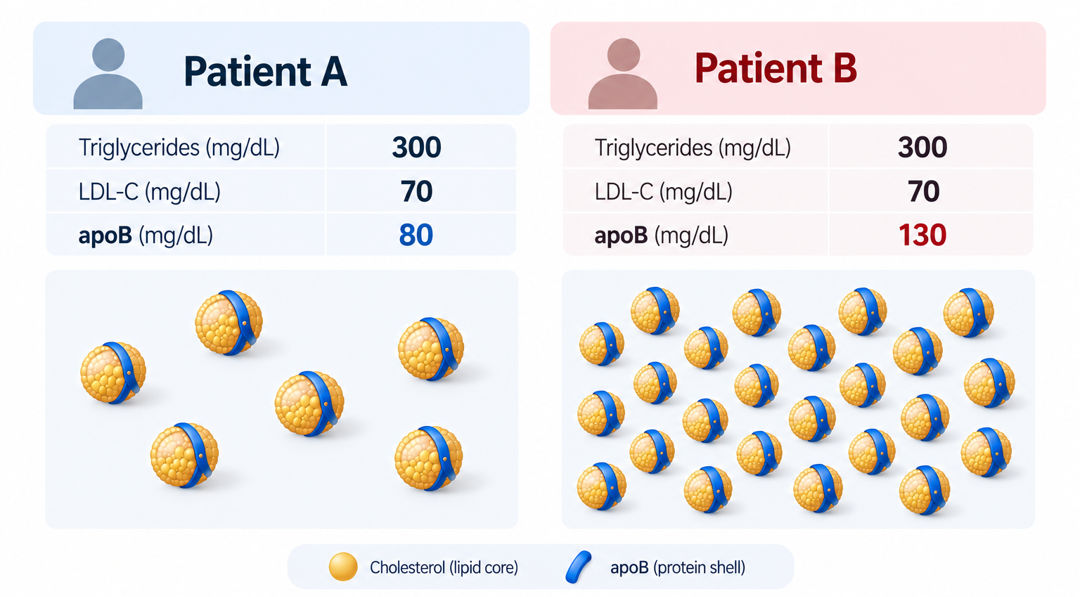
처음에는 두 환자 모두 TG 300 / LDL-C 70이었습니다.
이제는 이 두 숫자만 보고 두 환자를 같은 lipid phenotype이라고 생각하지 않을 것입니다.
Same TG. Same LDL-C. Different particle burden.
내일 외래에서 LDL-C 70을 만났을 때, 한 번만 더 물어보세요.
“이 환자의 atherogenic particle burden도 정말 낮을까?”
Lipidology becomes easier when we stop thinking only about cholesterol concentrations and start thinking about the particles that carry cholesterol.

Next series: LDL-C — the number we thought we already knew.
References
- Sniderman AD, et al. Discordance among apoB, non-high-density lipoprotein cholesterol, and triglycerides: implications for cardiovascular prevention. Eur Heart J 2024;45:2410-2418. doi: 10.1093/eurheartj/ehae258
- Quispe et al. Individual Variation in the Distribution of Apolipoprotein B Levels Across the Spectrum of LDL-C or Non–HDL-C Levels. JAMA Cardiol 2024 Aug 1;9(8):741-747. doi: 10.1001/jamacardio.2024.1310
- Remaley AT, et al. Role of apolipoprotein B in the clinical management of cardiovascular risk in adults: An Expert Clinical Consensus from the National Lipid Association. J Clin Lipidol. 2024;18:e647–e663. doi: 10.1016/j.jacl.2024.08.013
- Ginsberg HN, et al. Triglyceride-rich lipoproteins and their remnants: metabolic insights, role in ASCVD, and emerging therapeutic strategies—a consensus statement from the European Atherosclerosis Society. Eur Heart J. 2021;42:4791–4806. doi: 10.1093/eurheartj/ehab551