LDL은 어디서 와서 어디로 가는가?
같은 LDL particle도 간으로 돌아가 제거될 수도, 동맥벽에 붙잡힐 수도 있다. LDL-C라는 숫자 너머, LDL particle의 두 가지 운명을 따라가 본다.

Key Question:
What determines the LDL-C level we see in the blood?
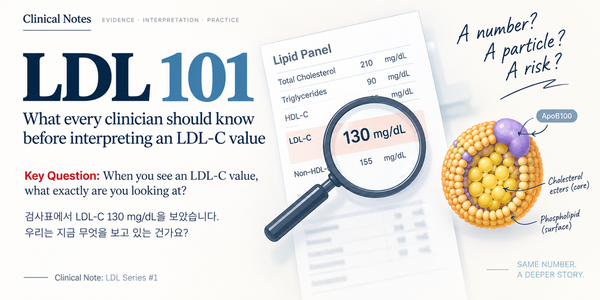
검사실에서 LDL-C 70 mg/dL, 130 mg/dL이라는 숫자를 받아보면 우리는 흔히 이를 몸속에 존재하는 ‘LDL의 양’처럼 생각한다.
그러나 LDL-C는 LDL particle 자체가 아니라,
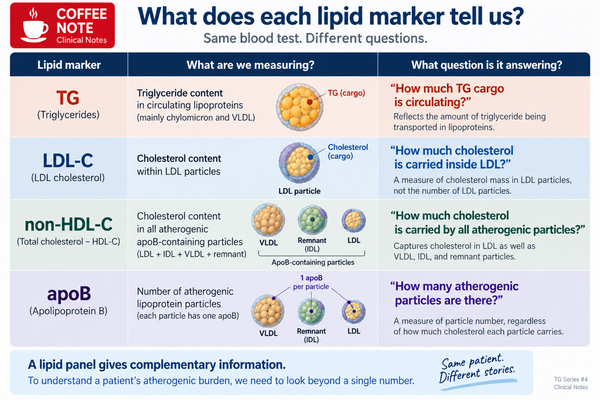
LDL particles 안에 들어 있는 cholesterol의 총량이다.
혈중 LDL level = production/remodeling과 clearance의 balance
혈중 LDL-C를 이해하려면 먼저 LDL particle의 일생을 따라가 볼 필요가 있다.
VLDL → remnant/IDL → LDL → clearance
그리고 이 여정의 중심에는 처음부터 끝까지 apoB100이 있다.
1. LDL은 LDL로 태어나지 않는다
간은 LDL을 직접 만들어 혈액으로 내보내는 것이 아니다.
간에서 분비되는 것은 apoB100-containing VLDL이다.
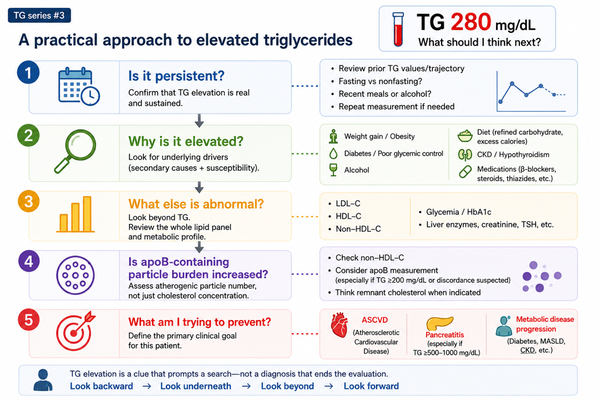
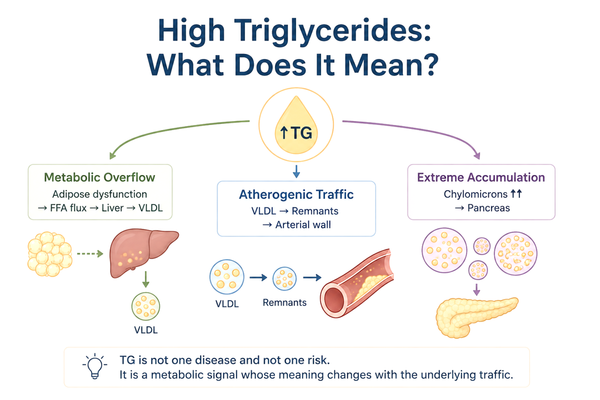
VLDL은 중성지방(triglyceride, TG)을 많이 싣고 있으며, 혈액 순환 중 내피세포 표면의 lipoprotein lipase (LPL)를 만나 TG를 잃는다(lipolysis).
이 과정에서 particle은 점차 작아지고 cholesterol-rich해진다.
VLDL → VLDL remnant/IDL → LDL
이 과정에서 일부 remnant는 간으로 운반되어 제거되고, 제거되지 않은 일부가 LDL로 전환된다.
따라서 LDL은 새로운 particle이 생겨난 것이 아니라, 앞선 TG series에서 만났던 TG-rich VLDL이 circulation에서 remodeling된 downstream product이다.
그리고 이 과정에서 중요한 사실이 하나 있다.
apoB100은 particle을 떠나지 않는다.
다른 exchangeable apolipoprotein과 달리 apoB100은 particle 사이를 옮겨 다니지 않는다. 거대한 apoB100은 lipid와 강하게 결합한 채 particle의 구조적 backbone을 형성한다.
즉, 하나의 VLDL particle이 LDL까지 살아남았다면,
VLDL에 있던 그 apoB100이 LDL에도 그대로 남아 있다.
덕분에 apoB를 particle number의 marker로 사용할 수 있다.
2. 우리는 이제 apoB100이 LDL을 어떻게 감싸는지도 안다
여기서 잠깐, 우리가 그려온 apoB의 모습 —
앞선 글에서 apoB를 lipoprotein particle에 붙어 있는 ‘택배 꼬리표’에 비유했다.
하나의 atherogenic particle에 apoB가 하나씩 존재하고,
apoB를 측정하면 cholesterol의 양이 아니라 particle 수를 헤아릴 수 있다는 개념에는 여전히 유용한 비유이다.
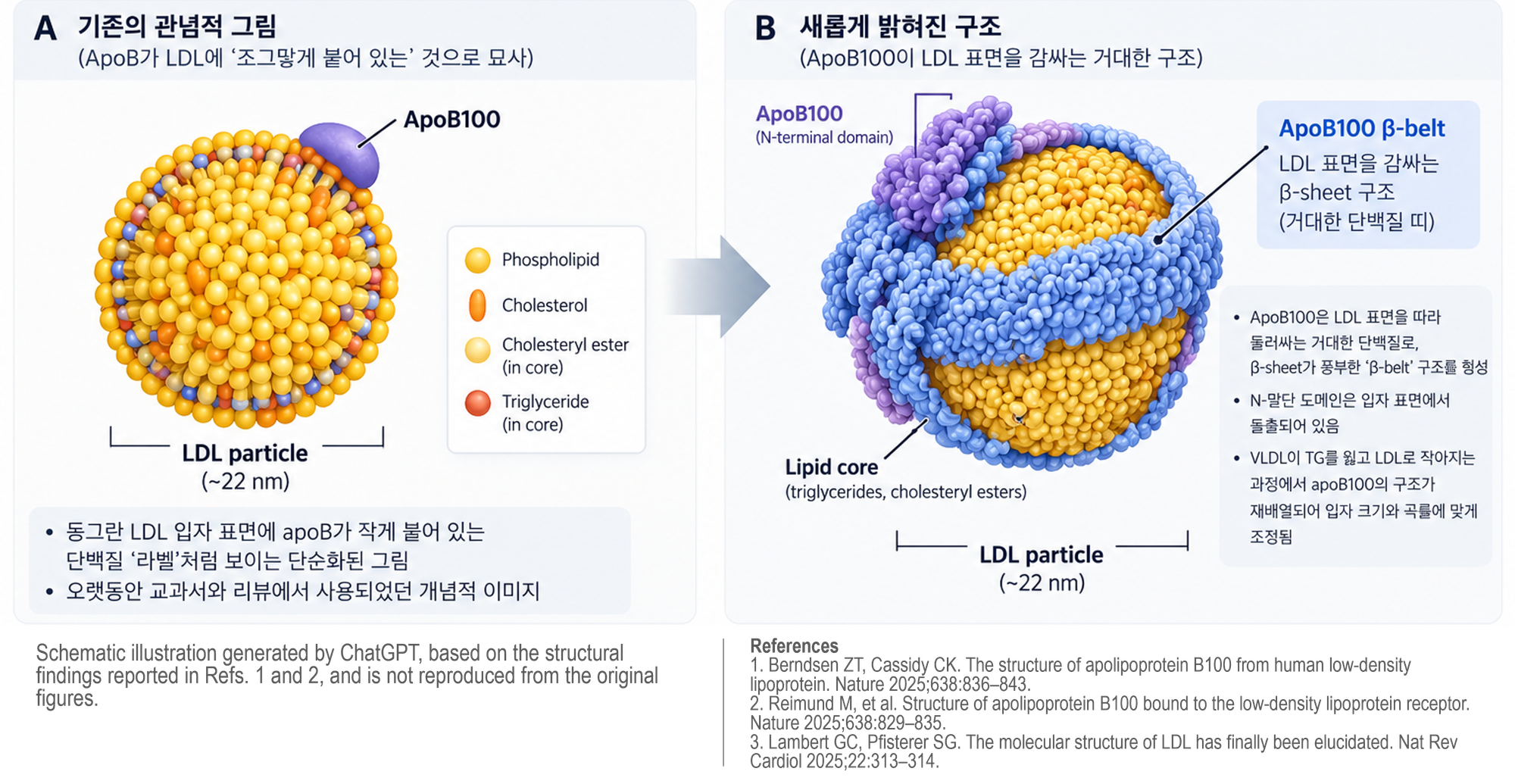
하지만 우리가 흔히 그려온 “동그란 LDL + 표면에 조그맣게 붙어 있는 apoB”는 실제 구조와는 꽤 다르다.
apoB100은 4,536개의 아미노산으로 이루어진 거대한 단백질로, lipid particle에 강하게 결합해 있어 오랫동안 구조 규명이 어려웠다.
최근 cryo-EM 연구로 apoB100이 기존에 상상하던 ‘꼬리표’보다 훨씬 거대한 구조라는 것이 밝혀졌다.
apoB100은 LDL 표면 한쪽에 붙어 있는 작은 단백질이 아니라,
β-sheet가 풍부한 긴 구조가 LDL 표면을 둘러싸는 β-belt를 이루는 거대한 structural scaffold에 가깝다.
VLDL이 TG를 잃고 LDL로 작아지는 동안에도 apoB100은 particle을 떠나지 않고, 변화하는 크기와 곡률에 맞추어 구조를 재배열한다.
즉 ‘택배 꼬리표’는 particle을 세는 방법을 설명하는 비유이고, 실제 apoB100은 LDL particle을 감싸고 구조를 유지하는 포장 골격에 더 가깝다.
ApoB is a useful “tag” when we count particles, but it is not merely a tag in molecular structure.
Figure 1. 아포B100 – LDL을 감싸는 구조적 골격.
이 거대한 apoB100은 LDL의 두 가지 운명 모두에 관여한다.
- 간에서는 LDL receptor와 만나 clearance 되고,
- 동맥벽에서는 proteoglycan과 만나 retention 될 수 있다.
3. 첫 번째 운명: 간으로 돌아간다
혈중 LDL의 주된 physiological fate는 간으로 돌아가 제거되는 것이다(hepatic LDL receptor-mediated clearance).
LDL 표면의 apoB100이 간세포의 LDL receptor (LDLR)에 결합하면 particle은 receptor와 함께 endocytosis 된다.
LDL–apoB100 binds LDLR
→ endocytosis
→ endosome/lysosome
→ cholesterol release
그러나 LDL과 LDL receptor의 운명은 다르다.
LDL particle은 분해되지만,
LDLR은 정상적으로 다시 간세포 표면으로 recycling되어 다음 LDL particle을 잡는다 (Figure 2).
최근 cryo-EM 연구는 apoB100–LDLR interaction을 molecular structure 수준에서 직접 보여주었다. 50년 넘게 알고 있던 Brown–Goldstein의 LDL receptor pathway를 이제 구조적으로도 볼 수 있게 된 셈이다.
4. 그래서 LDL-C는 production만의 결과가 아니다
이제 처음 질문으로 돌아가 보자.
그렇다면 우리가 측정하는 혈중 LDL-C 농도는 무엇에 의해 결정될까?
흔히 ‘cholesterol을 많이 만들어서’라고 생각하지만,
실제 혈중 농도는 production/remodeling과 clearance가 함께 결정한다.
Plasma LDL burden = production/remodeling vs. clearance
즉, VLDL production → LDL formation | LDLR-mediated clearance 사이의 steady state 결과이다.
특히 LDLR-mediated clearance가 떨어지면 circulating LDL particle이 증가한다.
Familial hypercholesterolemia가 가장 극적인 예다. LDLR 또는 apoB–LDLR interaction에 문제가 생기면 LDL clearance가 감소하고 plasma LDL이 크게 증가한다.
Clearance ↓ → circulating residence time ↑
LDLR dysfunction은 LDL-C를 높일 뿐 아니라 apoB-containing particle이 circulation에 머무는 시간도 늘린다.
따라서 atherogenic lipoprotein burden은 concentration뿐 아니라,
magnitude × duration of exposure의 문제이기도 하다.
현재의 LDL-C 수치뿐 아니라 prolonged exposure가 중요한 이유다.
5. PCSK9는 이 recycling loop를 바꾼다
LDLR이 LDL을 처리한 뒤 세포막으로 돌아오면 한 receptor가 반복해서 LDL을 제거할 수 있다.
그러나 PCSK9가 LDLR에 결합하면 receptor가 정상적으로 recycling되지 못하고 degradation 쪽으로 향한다.
따라서,
PCSK9 ↑
→ functional hepatic LDLR ↓
→ LDL clearance ↓
→ plasma LDL-C ↑
Figure 2. PCSK9와 LDL 수용체 운명의 변화.
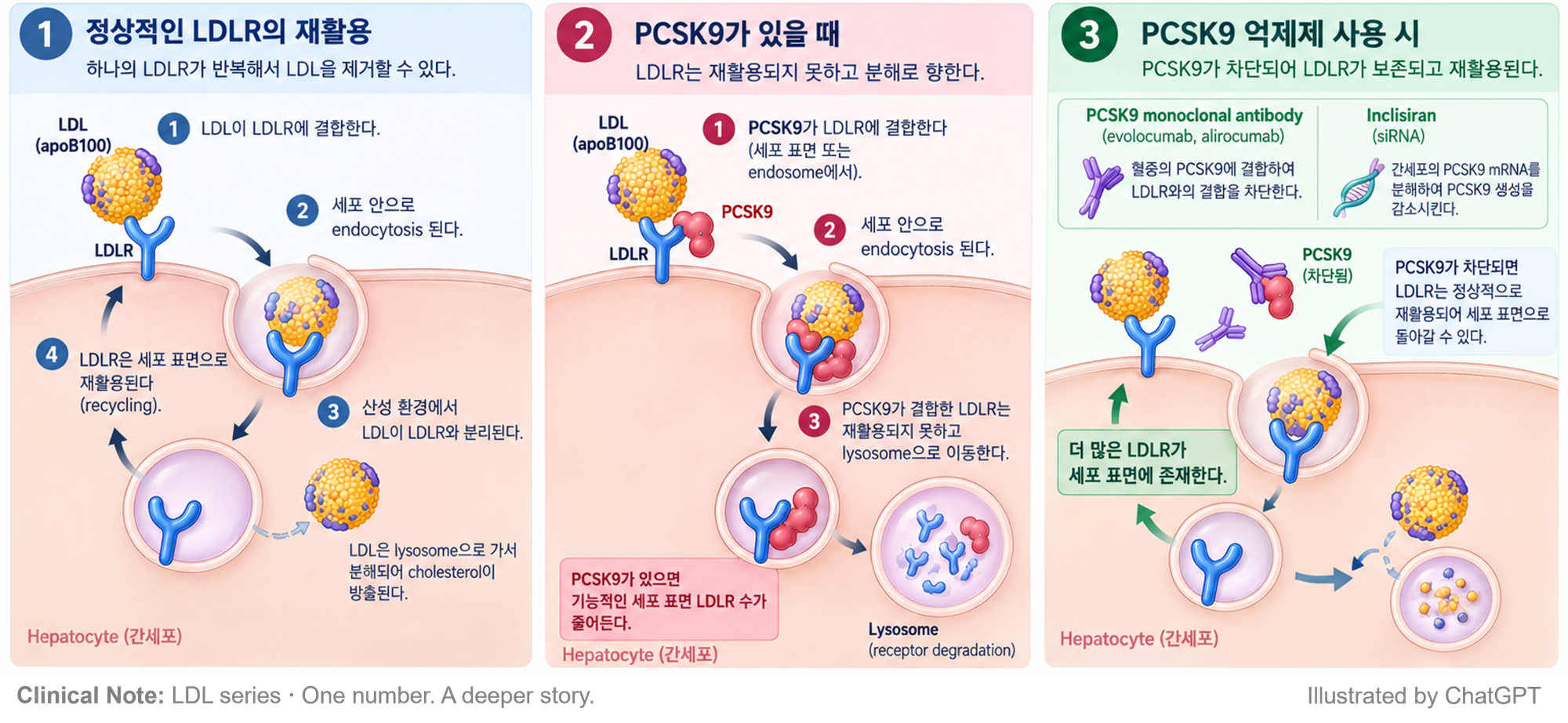
반대로 PCSK9의 작용을 억제하면 간세포 표면의 functional LDLR이 증가하고, circulating LDL clearance가 증가한다.
이 physiology가 PCSK9 inhibition이라는 치료 전략이 된다.
6. 사실 statin, ezetimibe, PCSK9 inhibition은 종착점이 같다
세 약제는 출발점이 완전히 다르다.
statin — hepatic cholesterol synthesis ↓
ezetimibe — intestinal/biliary cholesterol absorption ↓
PCSK9 inhibition — LDLR degradation ↓
하지만 중요한 downstream effect는 서로 만난다.
Functional hepatic LDL receptor availability/activity ↑
→ circulating LDL clearance ↑
→ plasma LDL-C ↓
Figure 3. 스타틴·에제티미브·PCSK9 억제의 공통 경로 — Different pathways, a shared destination.
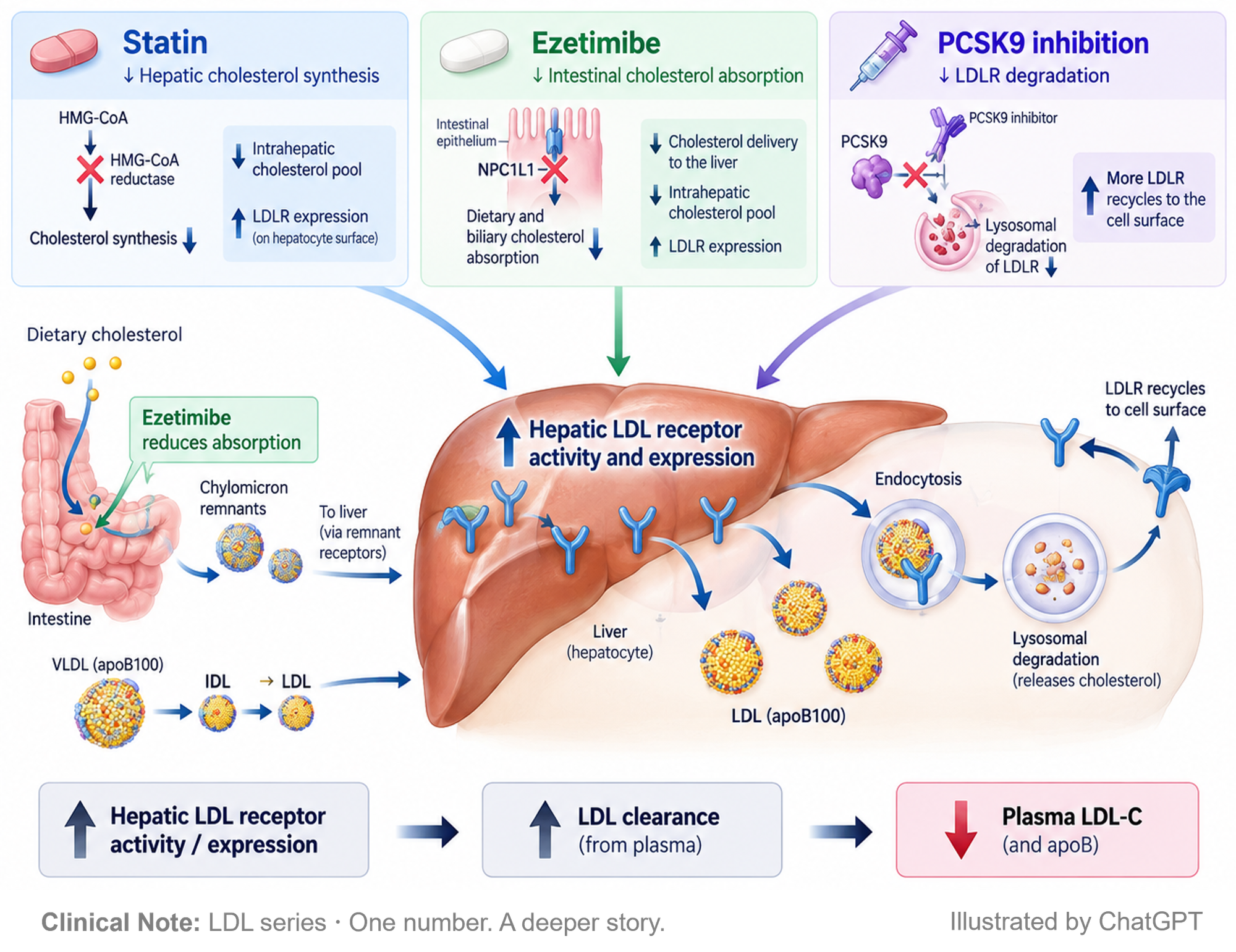
2026 ACC/AHA guideline에서도 세 약제는 서로 다른 기전으로 hepatic LDLR activity를 증가시키는 방향으로 정리된다.
즉, 출발점은 다르지만 세 약제의 종점은 같다 — circulating LDL particle의 hepatic clearance를 촉진한다.
7. 두번째 운명: 그런데 모든 LDL particle이 간으로 돌아가는 것은 아니다
LDL은 간으로 제거되기만 기다리는 수동적인 cargo가 아니다.
일부 LDL은 vascular endothelium을 active transcytosis로 통과해 arterial intima로 들어간다.
대부분은 다시 circulation으로 빠져나가지만, 일부는 apoB100의 양전하 부위와 arterial proteoglycan의 음전하 부위 사이의 electrostatic interaction으로 붙잡힌다.
중요한 것은 entry 자체보다 retention이다.
실험적으로 LDL influx가 증가하더라도 retention이 감소하면 atherosclerotic lesion formation은 크게 감소한다(response-to-retention hypothesis).
Figure 4. Two fates of an LDL particle.
The same apoB100-containing LDL can be cleared by the liver or enter the arterial wall, where a small fraction is retained.
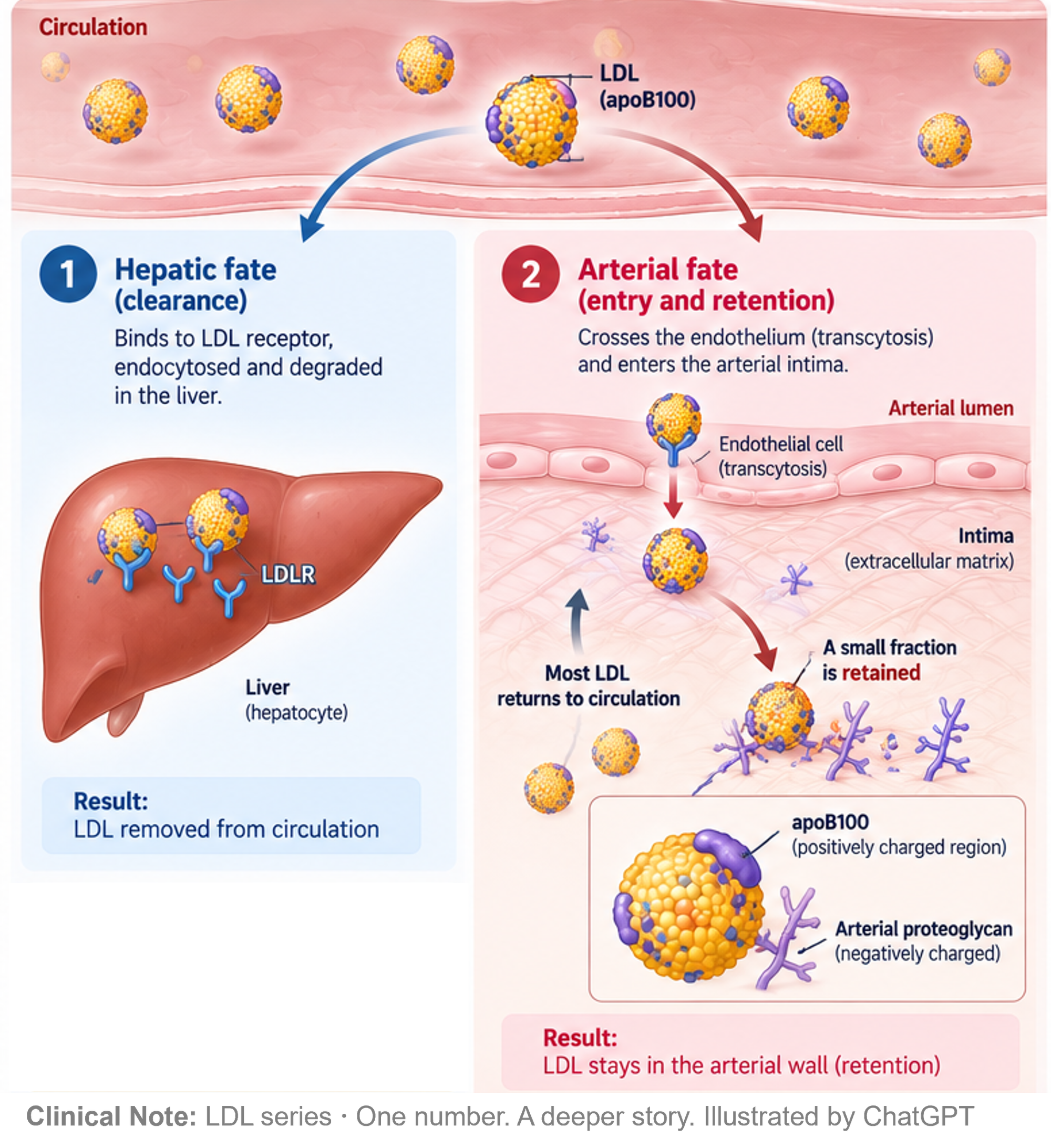
흥미롭게도 apoB100의 주요 proteoglycan-binding site (site B)는 LDL receptor-binding site와 겹친다.
The same apoB100 that allows LDL to be cleared by the liver can also anchor the particle in the artery wall.
결국 LDL particle의 운명은 어디에서 무엇을 만나느냐에 따라 갈라진다.
The same apoB100, two competing fates —
LDLR binding (liver) → physiological clearance
Proteoglycan binding (arterial wall) → pathological retention
8. Retention된 LDL은 더 이상 같은 LDL이 아니다
동맥벽 intima에 retention된 LDL은 oxidation, lipolysis, proteolysis와 aggregation을 겪는다.
Modified LDL과 oxidized phospholipids는 endothelial activation과 monocyte recruitment를 유도하고, macrophage uptake와 foam cell formation으로 이어진다.
Macrophage의 cellular cholesterol handling capacity를 넘어서면 cell death, cholesterol crystal formation, NLRP3 inflammasome activation으로 진행한다.
Figure 5 — What happens after LDL is retained?
Retention triggers a cascade of modification and cellular responses, leading to foam cell formation and plaque progression.
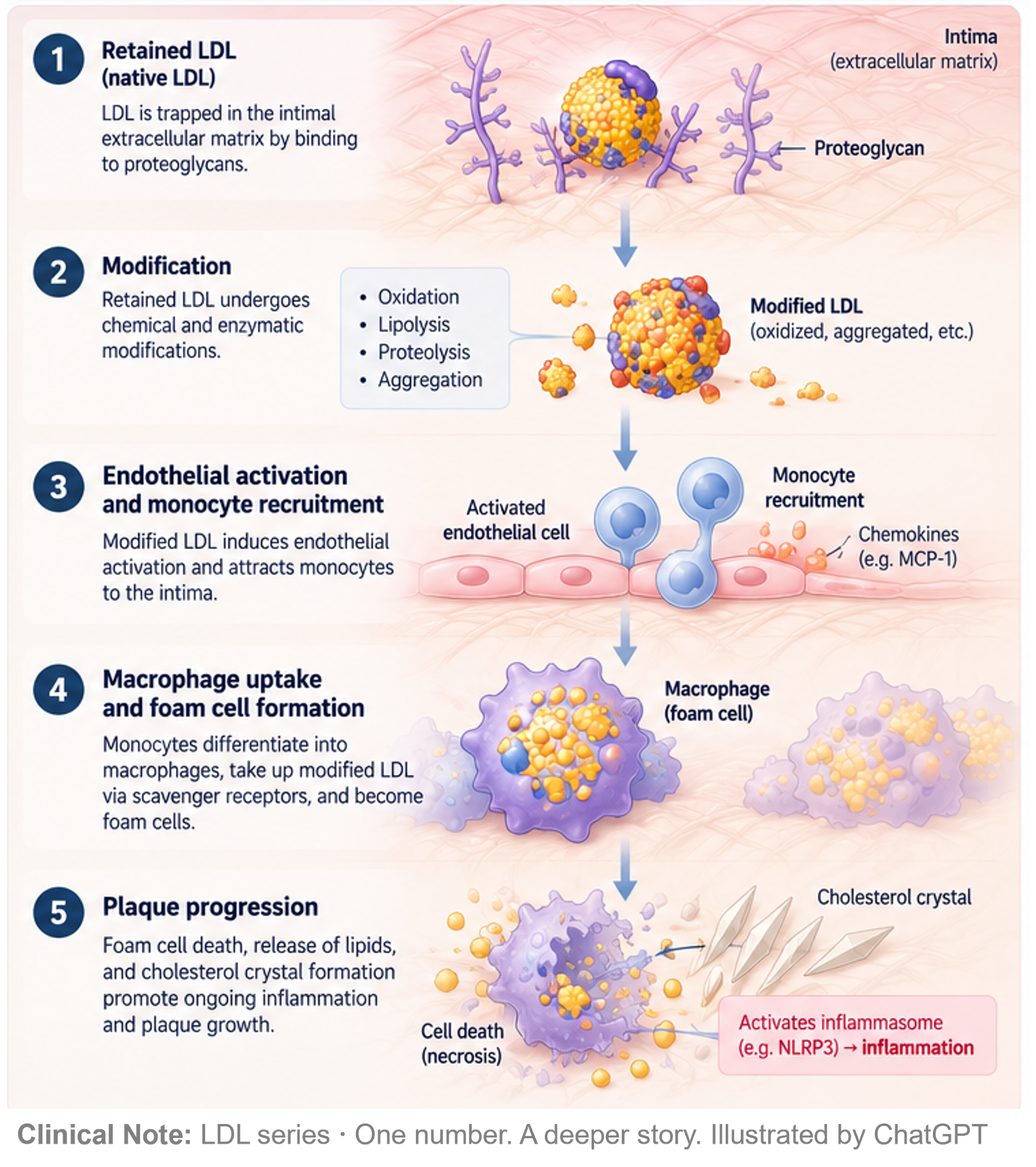
“LDL causes atherosclerosis”라는 한 문장 안에는 실제로
entry → retention → modification → inflammation → plaque progression
라는 일련의 과정이 있다.
순서가 중요하다 — Retention comes first. Inflammation follows.
9. 다시 검사실의 LDL-C로 돌아오면
이제 처음의 숫자가 조금 다르게 보인다.
LDL-C는 LDL particle 내부에 실린 cholesterol mass를 측정한다.
반면 LDL particle에는 apoB100이 하나씩 존재하므로 apoB는 particle number를 더 직접적으로 반영한다.
따라서 LDL-C는 단순한 ‘cholesterol production marker’가 아니다.
그 숫자 뒤에 있는 particle physiology:
VLDL production → remodeling → LDL formation → circulating residence → hepatic LDLR clearance
그리고 그 particle이 circulation에 존재하는 동안에는 또 다른 가능성이 있다.
arterial entry → retention → atherogenesis
Clinical Takeaway:
LDL-C is a concentration. LDL is a particle with a life history.
검사표의 LDL-C만으로는 LDL particle이 어디에서 왔고, 얼마나 오래 circulation에 머물렀으며, 얼마나 효율적으로 제거되고 있는지 알 수 없다.
LDL은 VLDL의 downstream product로 만들어져 apoB100을 지닌 채 circulation을 돌다가 대부분 hepatic LDL receptor pathway를 통해 제거된다.
일부 particle은 artery wall에 들어가 retention되고 atherogenesis의 출발점이 된다.
그런데 잠깐.
이 복잡한 system의 결과인 LDL-C를 검사실에서는 대체 어떻게 측정하는 걸까?
→ LDL series #3, coming soon.
References
- 2026 ACC/AHA Multisociety Guideline on the Management of Dyslipidemia. Circulation. 2026;153:e1154–e1276.
- Borén J, Packard CJ, Binder CJ. Apolipoprotein B-containing lipoproteins in atherogenesis. Nature Reviews Cardiology. 2025;22:399–413. doi: 10.1038/s41569-024-01111-0.
- Berndsen ZT, Cassidy CK. The structure of apolipoprotein B100 from human low-density lipoprotein. Nature 2025;638:836–843. doi: 10.1038/s41586-024-08467-w
- Reimund M, et al. Structure of apolipoprotein B100 bound to the low-density lipoprotein receptor. Nature 2025;638:829–835. doi: 10.1038/s41586-024-08223-0.
- Lambert GC, Pfisterer SG. The molecular structure of LDL has finally been elucidated. Nat Rev Cardiol 2025;22:313–314. doi: 10.1038/s41569-025-01128-z.
- Ference BA, Braunwald E, Catapano AL. The LDL cumulative exposure hypothesis: evidence and practical applications. Nature Reviews Cardiology. 2024;21:701–716. doi: 10.1038/s41569-024-01039-5.